


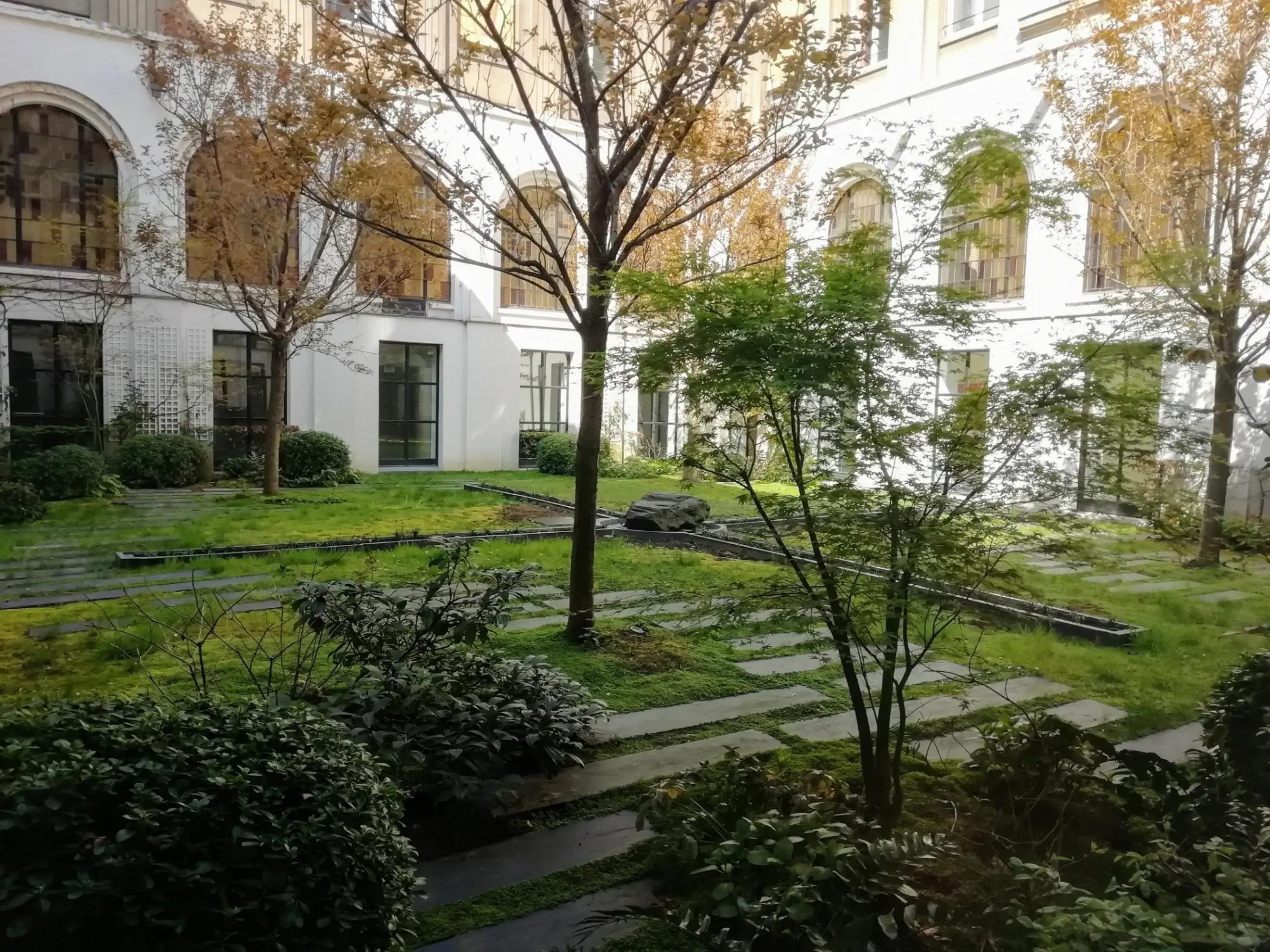
We hosted our workshop at Le Cloître Ouvert, a Dominican monastery in the heart of Paris.
We believe there’s a shortage of practically focused discussions about institutions that will work in a world with powerful AI systems, among the researchers actually equipped to design them. The relevant expertise exists — in mechanism design, social choice theory, legal theory, political philosophy — but it’s scattered across fields that rarely talk to each other, with few shared venues for cross-disciplinary work.
In February 2026, we brought 25 of these researchers together in Paris, co-located with the IASEAI conference, for a day-long workshop on “AGI-ready institution design”. Their backgrounds ranged from mechanism design and social choice theory to legal theory, political philosophy, behavioral science, and climate policy. Participants came from DeepMind, Oxford, UC Berkeley, the Australian National University, GovAI, Mila, the AI Democracy Foundation, the Cooperative AI Foundation, the University of Michigan, and several other institutions.
We wanted to do two things. First, test how much alignment there was across these disciplines on what the post-AGI institutional landscape should look like, and which success criteria matter for specific design problems. Second, start working through some of the harder underlying questions that any serious institutional proposal will eventually have to confront.
Mapping the design space
As a shared framework for the workshop, we developed a way of organizing the full space of institution design. The core observation is that institutions differ in the type of information they process (a market aggregates preferences through prices; a court adjudicates competing claims to rights; a standards body establishes coordination protocols).
We identified seven such bases: protocols, preferences, rights, incentives, expertise, norms, and thick commitments, roughly ordered by how much shared understanding they require to function. At the thin end, coordination protocols work even between agents with no shared values. At the thick end, institutions built on shared commitments — monastic rules, substantive constitutions, AI alignment documents — require deep, articulated agreement about what matters.
For each of these types, at each scale from dyadic to global, we asked: what breaks in a world of powerful AI, and what new institutions are needed? The resulting map has many open cells. Some are being actively worked on; others have received almost no attention. Participants found the framework useful for locating their own work in a larger landscape and identifying where the gaps are. We’ll be publishing it in full soon.
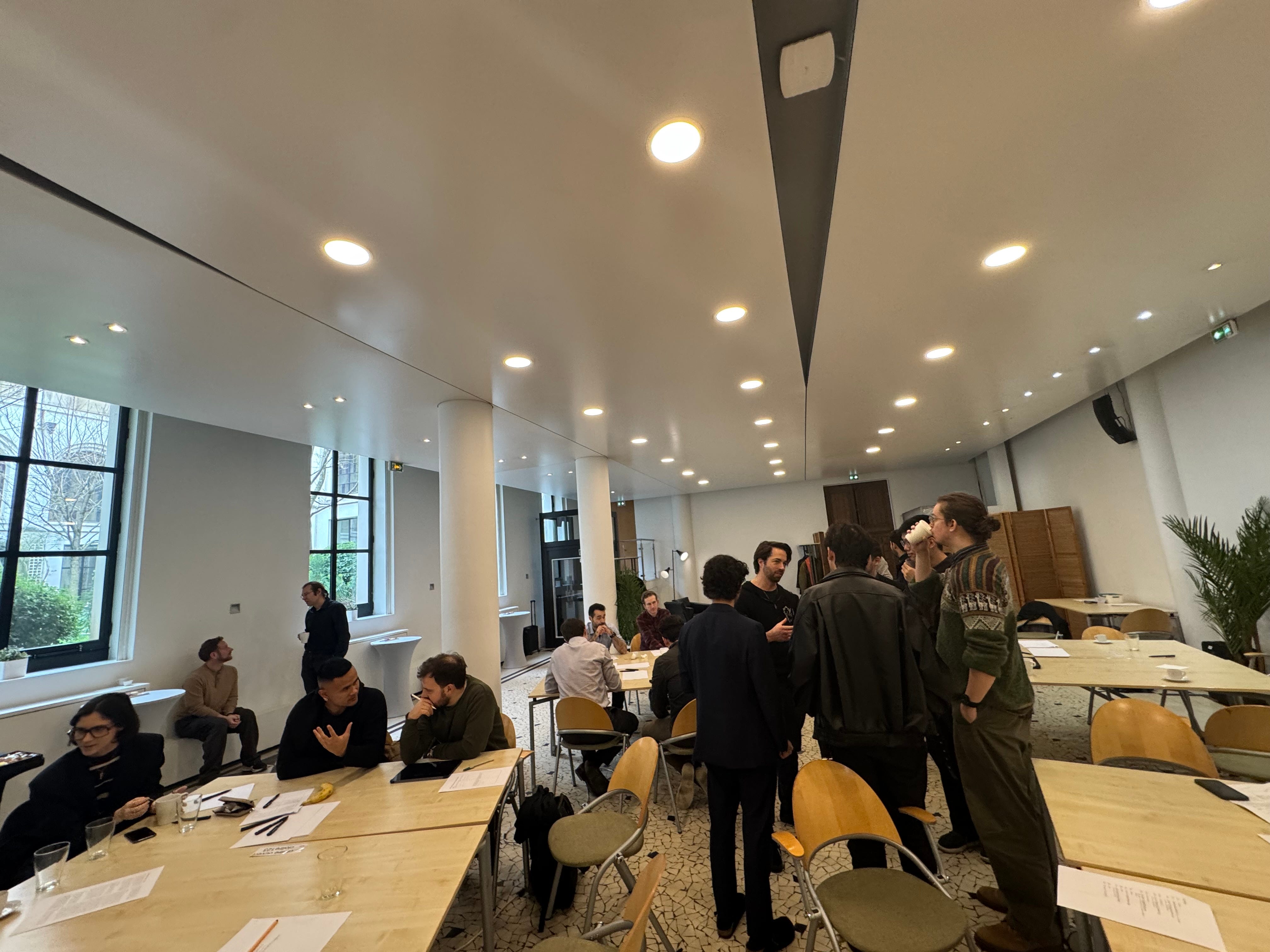
Highlights from the discussions
The workshop included cross-disciplinary discussion groups and participant-led breakouts, along with a range of structured activities. Here we highlight three of the many threads that emerged from discussions:
Institutional design criteria. The institution design flowerings of the past have been motivated by broad public values. Liberal institutions in the West were generated in two bursts: the first based on aspirations to freedom, around the end of the 18th century; the second based on aspirations to fairness, mostly during the 20th century. Which such principles will inspire these new institutions, for a world with powerful AI? We put this to the group and found four main clusters: purpose, fairness, abundance, and freedom. Each cluster stated their case and was cross-examined by the others. Several participants switched tables over the course of the debate. This was a lively debate and a hugely important one, and inspired a new MAI project you’ll hear more about very soon.
Delegation and oversight. A central question was when governments should delegate decisions to AI and when humans should retain control. The hardest cases involve normative judgment, where the “right answer” depends on values society hasn’t fully articulated.
Drawing on Ruth Chang and Charles Taylor, several participants argued that certain decisions are constitutive of collective identity: going through the deliberation is part of what gives the outcome legitimacy, even if an AI could predict the result. A related concern was the erosion of human competence: if we delegate scientific and legal reasoning to AI systems for long enough, we lose the institutional knowledge needed to evaluate whether those systems are performing well, making future oversight impossible.
Political theory for a post-AGI world. Can existing political philosophy handle AGI? The group was skeptical. Rawlsian liberalism offers a minimal, neutral baseline that scales across diverse populations, but may be too thin to guide ambitious collective projects or justify the exercise of power when AI is accelerating coordination and locking in values. Communitarian approaches offer richer visions of the good but risk empowering moral elites and failing under genuine pluralism. No resolution was reached, but there was a shared diagnosis: both traditions feel incomplete, and something in between — shared social imaginaries and institutional commitments that go beyond Rawlsian minimalism without collapsing into communitarian moral authority — needs to be developed.
What’s next
The conversations in Paris confirmed something we suspected: there’s alignment across these disciplines when people are actually in the same room, and a lot of low-hanging fruit in getting the right researchers working on the right problems together. We plan to organize more workshops, bringing together mechanism designers, legal scholars, political philosophers, economists, and AI governance researchers to keep working through these questions. We want these discussions to retain the big questions about the kind of society we’re aiming to create while staying concrete enough that someone could act on the proposals or argue with them.
If you’re working on institution design for a world with powerful AI and want to be involved, reach out to us at research@meaningalignment.org.
Nice job MAI! 👍🏽 Looking forward to more of this.
Thanks for sharing some highlights from the workshop! I'm eager to get in touch and talk about our mutual passion about this space!